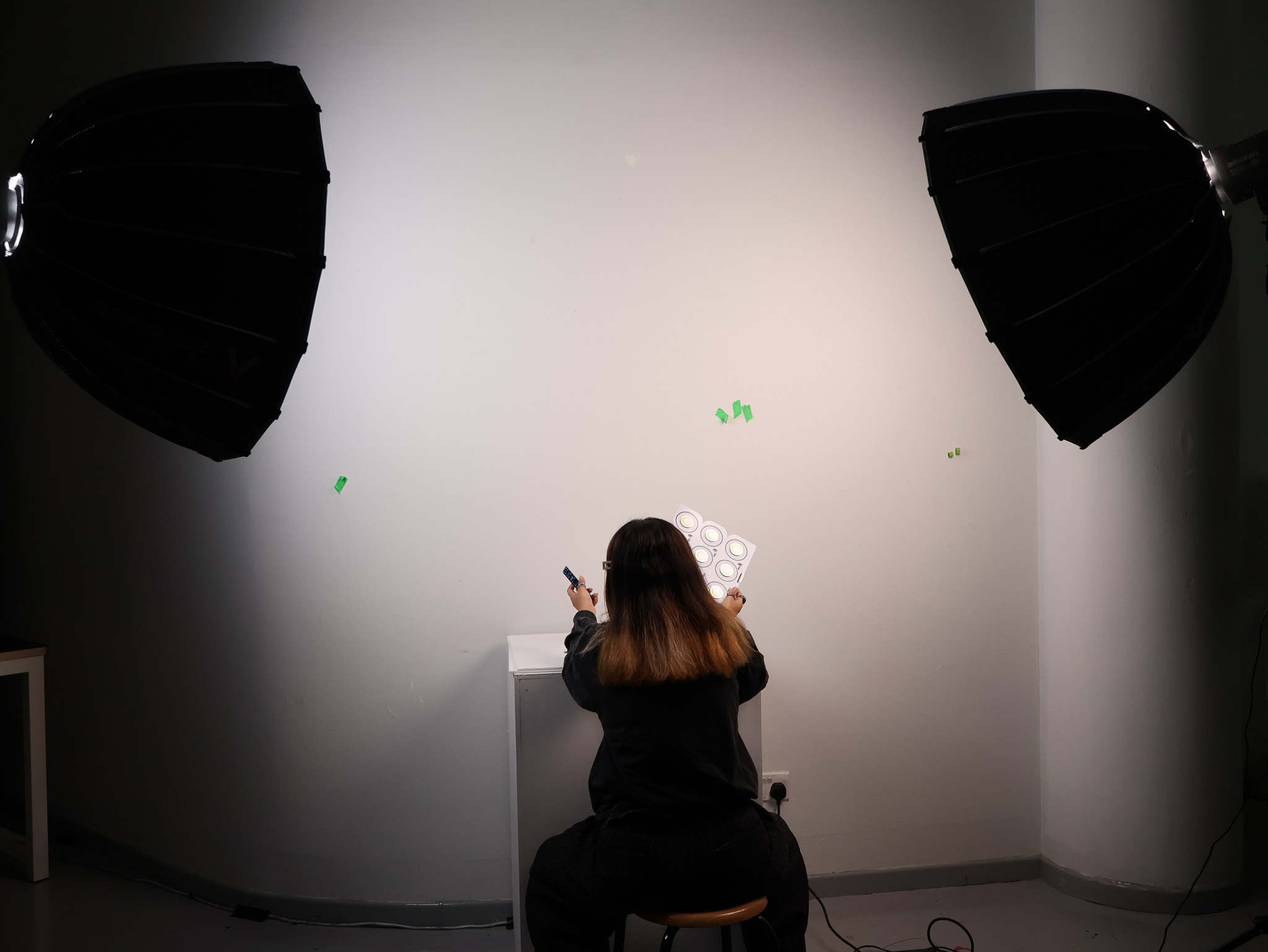
PCB documentation - Week 15

Final stretch. The semester arc was prototype → test → compile data → write → finalise, and that arc is reaching its end. Three prototype variants exist: grid/blocks, hexagon box, joystick, in 3D printed, wood, and acrylic. PCB v2 designed with ESP Feather S3 for Bluetooth. Two rounds of practitioner user testing completed.

The dissertation was submitted in week 7. What remains is the exhibition: the publication/zine layout is drafted, three short publications are planned. The typeface and identity work is ongoing, simplified per the feedback from last week.

WEEK 15

FINAL EXHIBITION

Presentation Prep

3D printing fixes ongoing. Exhibition and final presentation preparation. CPJ website completion.

DISSERTATION

Submitted — Week 7

Dissertation submitted. Three short publications planned for the exhibition. Video edit of open studio recording with Riduan to be completed.
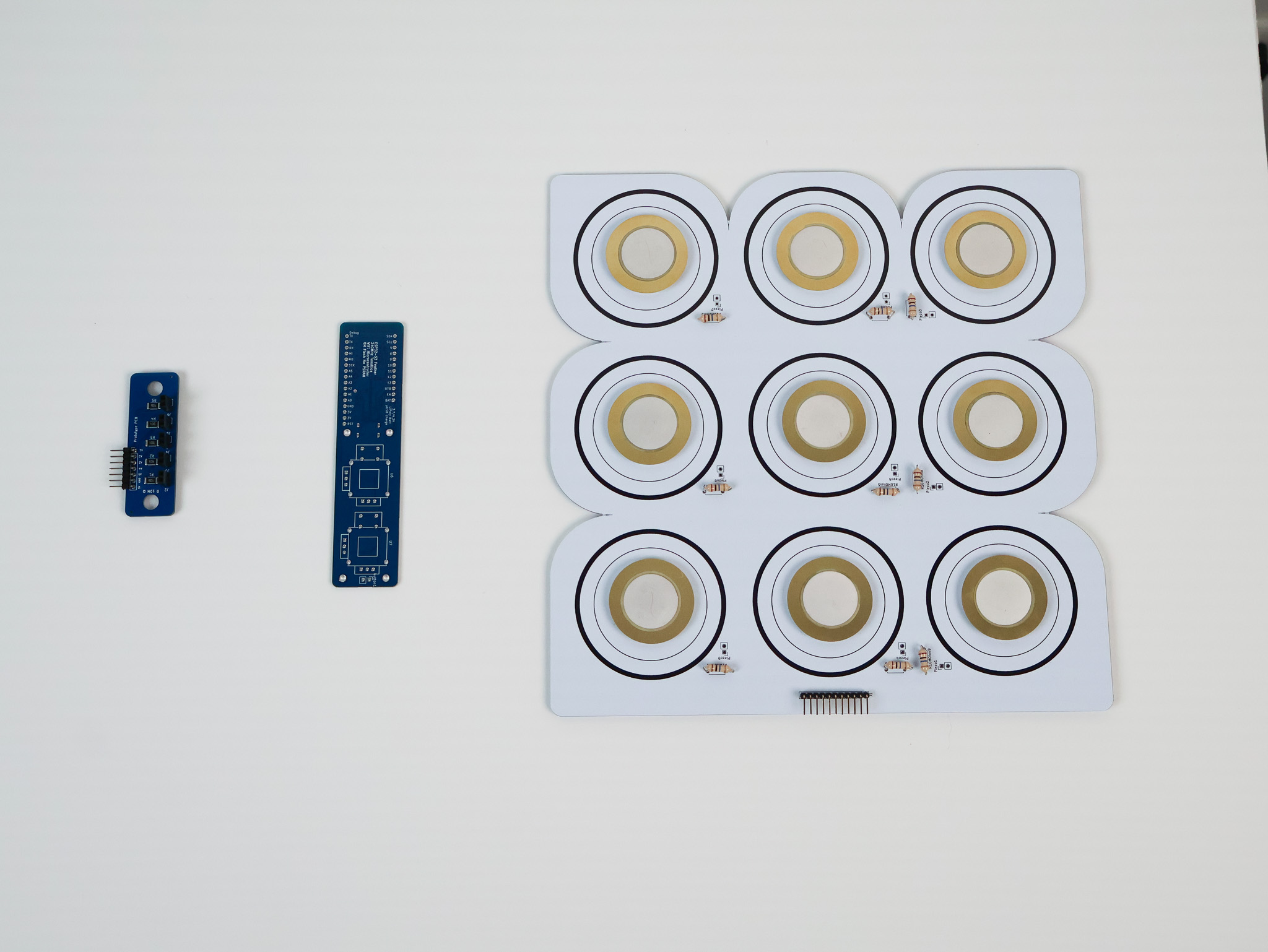
PCB complete series

What the semester produced: a pressure-sensitive physical controller designed for creative practitioners, tested with performers, iterated across three material approaches and two PCB versions. Research through Design as method, the making and the writing as the same thing, not two parallel processes.

The tool was designed to be transparent in use, to feel like something the performer controls rather than something that happens to them. Whether it succeeds at that is a question the testing data addresses. The CPJ documents the arc of that question from the first week to this one.

Week 15 · End of Year Three

Visual Harmonics

2024 — 2026

End of Year Reflection
"The making was the research. The writing was the making. I didn't know that at the start."

Three prototypes. A textured xylophone. A hexagonal grid. A wireless joystick. Each one a question put into physical form, each one answered through the hands of ten participants pressing, tapping, dragging across a surface that fed signal into code that turned into light.

Research through Design meant the making and the measuring weren't separate activities. Every SUS score, every interview note, every participant comment about spatial confusion or tactile feedback was data the next prototype had to respond to. The process had its own logic.

What the project became was not planned at week one. The controller started as a drum pad idea and ended as an instrument for expressive duration, sustained gesture, the held note. That wasn't designed. It emerged.

What I learned to do this year: KiCad PCB design, ESP32 Bluetooth firmware, p5.js generative visuals, TouchDesigner, 3D printing tolerances, SUS methodology, how to run a structured interview without leading the participant, how to read the data and trust what it's saying even when it contradicts what you wanted.

More than the technical skills — I learned to sit with uncertainty for long enough that the work figures itself out. That the prototype doesn't have to be right, it has to be honest about what it's testing. That the consultation is useful even when the feedback stings.

This CPJ is the documentation of that arc. From week one's first breadboard to week fifteen's three printed enclosures and a Bluetooth PCB, every page is a week the work moved forward somehow, even the weeks that felt still.

To everyone who sat down and tried the controller — thank you. To everyone who gave feedback that forced a redesign — especially thank you. That's what the research needed.

Visual Harmonics · 2026