CHAPTER 2
Chapter 2 moves from interaction to aesthetics, exploring what the visuals should actually look like. Three directions were tested: dithering to convert input images into a personalised pixel style; Blender with Python scripting to generate abstract, high-quality simulations; and NFC token tags as a physical mode-switching mechanism. The question running through all three is how to build a visual vocabulary that feels both responsive and distinct.
EXPERIMENT 2.1
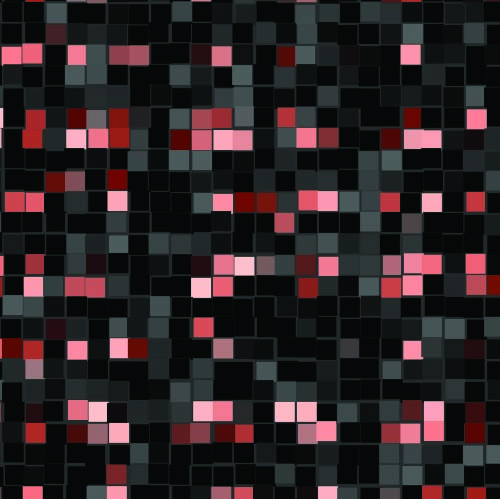
Concept: Exploring visual personalization by converting input images into dithered visuals. Simplifies high-resolution data into limited colors and blocks.
Error Codes: These patterns show what happens when the system uses bad data. The blocks show how unstable input turns into unique visual textures.
Noise Exploration: Explored Perlin noise and fractal noise. However, standard noise generators were deemed too predictable and bland for the project's aesthetic needs.
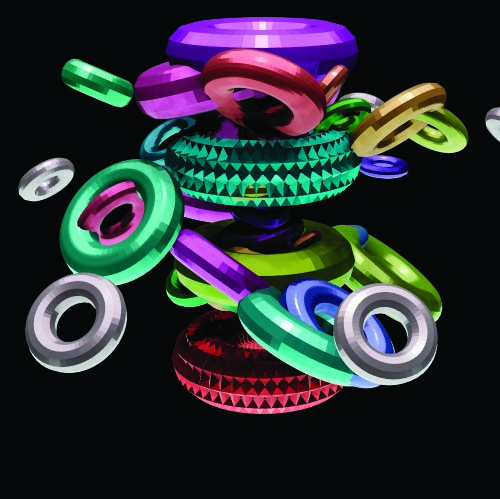
Process: Tested how Blender handles input variables like rotation, speed, or scale to output visuals using Python scripts.
Technical: Scripts control positioning, color, and geometry of clustered objects, establishing a robust foundation for external sensor data.
Aesthetic: Designed scalable, abstract visuals that can be customized for any user's personal style.
EXPERIMENT 2.2
EXPERIMENT 2.3
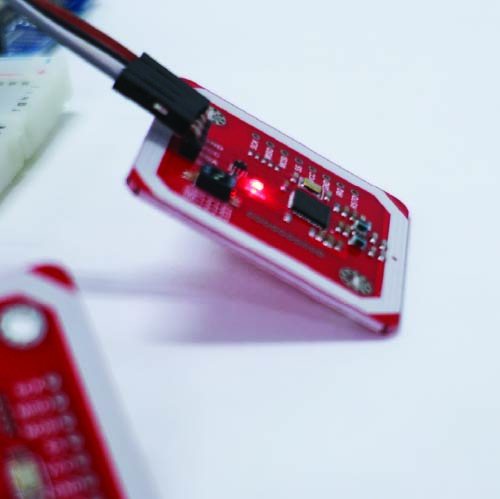
Process: Using NFC tags as physical tokens to switch visual modes instantly.
Technical Setup: Used a multiplexer (MUX) to handle three NFC readers on a single set of pins, simulating six unique input choices.
Proposed Prototype: Placing a physical token on the designated surface would instantly load a unique visual scene, allowing for rapid aesthetic switching.