PROTOTYPE 3
"The controller's strength is in expressive duration, not punctuation."
Portotypes 1 and 2 were both tethered to a laptop via USB. Functional, but a performer standing at a fixed point with a cable trailing to a computer is not free to move, and that constraint shapes the quality of the performance. Prototype 3 takes portability seriously as a design requirement, not an afterthought.
From discrete to continuous: Piezo sensors respond to impact, a hit, a tap. That gives clear on/off events. A joystick gives continuous X/Y data updated in real time, opening different expressive possibilities: slow drifts, circular movements, held tension. The question this prototype explores is whether continuous control is more or less intuitive than discrete impact for shaping visuals live.
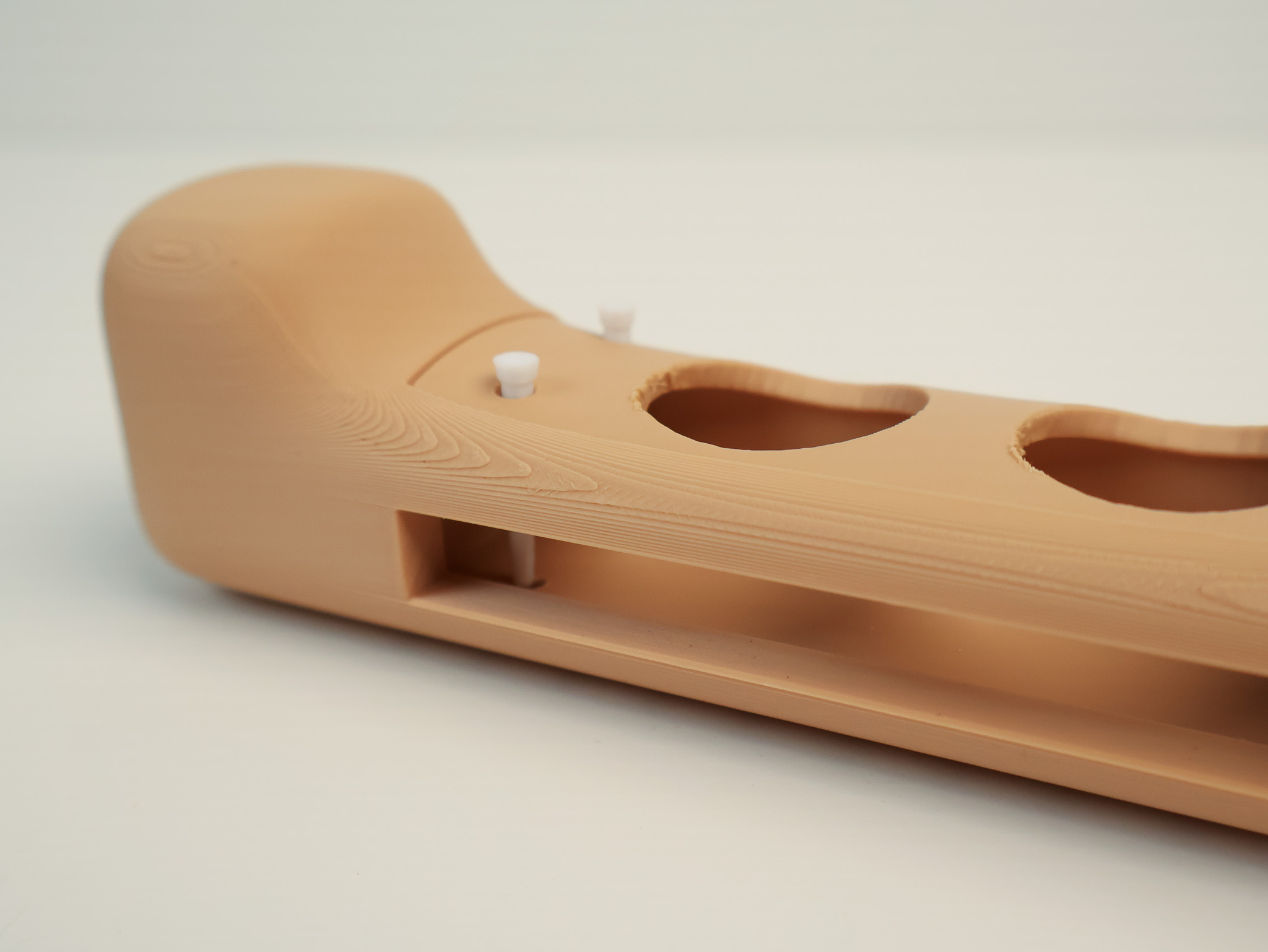
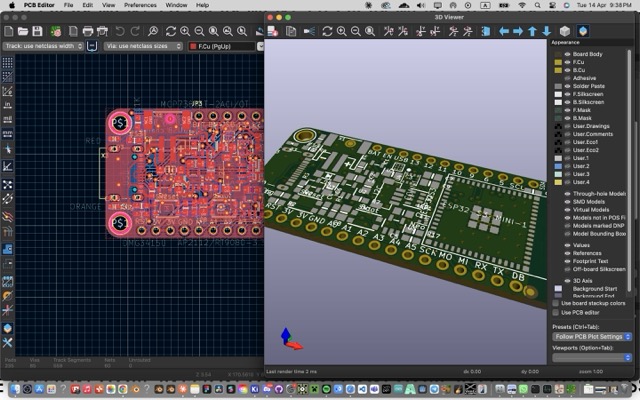
The ESP Feather S3 replaces the Arduino for this prototype. Built-in Bluetooth removes the USB tether entirely. Joystick data is read from the analog axes and transmitted wirelessly to the laptop, where p5.js processes the incoming values and updates the visuals in real time.
Bluetooth introduces latency that matters differently for this kind of input. For impact sensors, a few milliseconds is imperceptible. For continuous joystick control, where the performer watches the visual respond as they move, even slight lag can break the feeling of direct connection. Managing this was the central technical challenge of the prototype.
Prototype in Use
| Participant | Q1 | Q2 | Q3 | Q4 | Q5 | Q6 | Q7 | Q8 | Q9 | Q10 | SUS Score |
|---|