CHAPTER 5
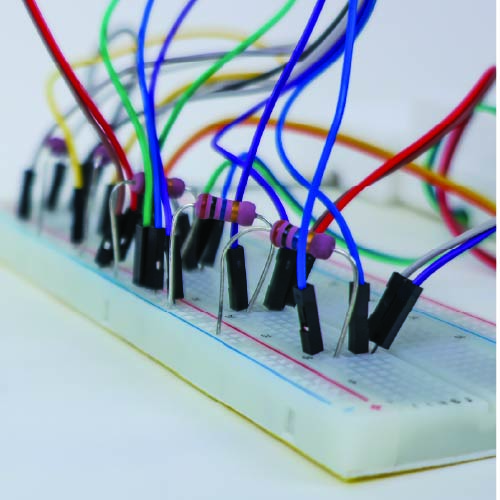
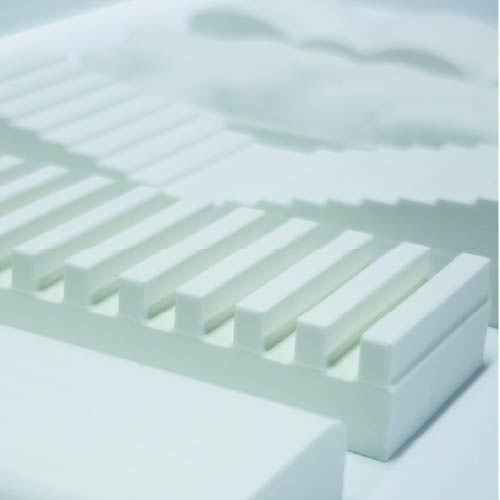
Chapter 5 builds out the sensor array and starts thinking seriously about the physical surface the performer interacts with. Experiment 5.1 scales to five simultaneous piezo sensors across distinct drum zones, working through the coding challenge of reading multiple analog signals fast enough to identify hits in milliseconds. Experiment 5.2 tests 3D printed surface textures, ridges, waves, organic patterns, to explore how the tactile quality of a surface changes the character of the vibration it picks up, and the kind of visual it can drive.
EXPERIMENT 5.1
Circuit: Stabilized the physical circuit to handle multiple Piezo sensors simultaneously. Organized wiring to prevent signal interference.
Expansion: Expanded to 5 simultaneous sensors to capture distinct drum areas (center, rim, sides).
Code & Challenges: The challenge was reading 5 analog signals at high speed. Refined code to identify which sensor was hit in milliseconds. A major issue was the fragility of Piezo cables, requiring careful securing.
EXPERIMENT 5.2
Design: Exploring surface textures. 3D modeled patterns (ridges, organic waves) to create tactile zones. Created 5 prototypes to test feedback variety.
Function: Dragging a finger across ridges creates continuous vibration, triggering sustained visual effects rather than single impacts.
Sensor Integration: Designed a specific slot underneath for the Piezo to fit tight against the surface, ensuring clear vibration pickup.